Importing Pistachios into Canada Just Got More Complicated: What Importers Need to Know About Iran Restrictions (and How to Keep Shipments Moving)
Over the last year, pistachios have moved from being a “simple” dry grocery import to a commodity with very specific Canadian controls. If you are bringing in pistachio kernels, in-shell pistachios, pistachio paste, spreads, flour, or foods made with pistachios, the Canadian Food Inspection Agency’s (CFIA) current position is clear. Pistachios and pistachio products originating from Iran face a refusal of entry, and shipments from all other origins need stronger documentation to prove they are not Iranian in origin.
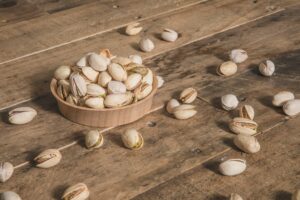
What is restricted: Iranian-origin pistachios are refused entry
Under the CFIA’s pistachio product requirements, pistachios and pistachio products originating from the Islamic Republic of Iran are refused entry into Canada until further notice. The CFIA first introduced temporary measures effective September 27, 2025, and the current requirement states that as of December 2, 2025 Iranian-origin pistachios and pistachio products are refused entry.
The CFIA ties the restriction and license conditions to specific HS-OGD (Harmonized System – Other Government Department) extensions used in the import declaration, including pistachios in shell (0802.51), pistachios shelled (0802.52), pistachio flour/meal/powder (1106.30), pistachio paste/butter/spread (2007.99 and 2007.99), and preparations of pistachio (2008.19). In plain language: it is not just “bags of nuts” that are impacted—it is also ingredients and processed pistachio formats.
Why the restriction exists: Salmonella risk, recalls, and an ongoing outbreak
The CFIA implemented these measures because pistachios and pistachio products imported from Iran were linked to multiple Canadian recalls due to Salmonella contamination. The CFIA notes that, between July and December 2025, numerous pistachio products from Iran were recalled, alongside an outbreak investigation led by the Public Health Agency of Canada with multiple laboratory-confirmed Salmonella infections reported. The controls are designed to prevent contaminated product from entering (or re-entering) the Canadian marketplace and to strengthen traceability and accountability in import documentation.
Importing pistachios from other countries: you must prove it is not Iran
Here is the part that surprises many importers: even if you are buying from a country other than Iran, the CFIA requires federally licensed importers (Safe Food for Canadians, or SFC license holders) to obtain proof of origin from the exporter (or the competent authority in the exporting country) showing the pistachios originate from a country other than Iran. That proof of origin must be included in your import declaration. If it is missing, you may be asked to re-submit your declaration with the document. If the proof cannot be provided, the shipment can be refused entry.
From a customs-broker perspective, this is where small errors become expensive. The CFIA specifically reminds importers that, under section 13(1)(e) of the Safe Food for Canadians Regulations (SFCR), you must properly describe the food you import, including using the appropriate HS code on each import declaration. If the HS/OGD extension does not match the product (for example, paste declared as kernels, or a mixed confectionery declared as “preparations of pistachio”), you risk delays, a rejected declaration, or enforcement action.
A practical workflow to import pistachios compliantly
- Confirm the product format and ingredients. Are you importing in-shell, shelled, kernels, flour, paste, butter/spread, or a preparation? If it is a finished food (for example, chocolate, ice cream, bakery items), confirm whether pistachio is an ingredient and in what form.
- Confirm true origin (not just ship-from). “Shipped from” is not the same as “originating in.” Ask your supplier where the pistachios were grown/harvested and whether any Iranian-origin pistachios are blended or repacked into the lot.
- Collect proof of origin early. Build it into your purchase order terms so it is ready before the goods arrive. The CFIA expects proof of origin for non-Iran shipments to be included with the import declaration.
- Validate HS-OGD classification. Work with your broker to align the commercial description, ingredients, and format to the correct HS code and the relevant HS-OGD extension(s) CFIA flags for pistachio products.
- Prepare your import declaration package. At minimum, you want consistent commercial invoice details, packing list, and the proof of origin document, with product descriptions that match your declaration.
- Have a “first destination in Canada” plan. Your declaration includes where the shipment is going first in Canada. Make sure that location can receive and hold the product if the CFIA requests it (for example, for document review or follow-up).
- Keep records and be ready to respond quickly. If the CFIA requests clarification or a revised declaration, speed matters. A same-day resubmission can be the difference between a manageable delay and a storage and demurrage problem.
Common pitfalls (and how to avoid them)
- Relying on a generic certificate. The CFIA’s proof-of-origin expectation is specific: it must demonstrate the pistachios originate from a country other than Iran. Ask for origin details that are clear and consistent with the shipment.
- Using vague invoice wording. “Nuts” or “pistachio products” is not enough when the HS-OGD extension filing must reflect the exact format (in-shell vs shelled vs paste vs flour vs preparation).
- Assuming a processed item is exempt. Pistachio paste, spreads, and preparations are explicitly in scope on the CFIA’s pistachio product page.
- Not aligning documents. If the proof of origin says one origin, the invoice implies another, and the label shows a third, you have created a review trigger.
- Waiting until arrival to request proof. If the goods are already at the port/terminal, a missing document can quickly become expensive detention, storage, and appointment fees.
Final takeaway: make “origin proof” part of your standard pistachio import playbook
If you remember only one thing, make it this: the CFIA’s current approach is to refuse entry for pistachios and pistachio products originating from Iran, and to require SFC-licensed importers to prove that all other pistachio shipments are not Iranian in origin. Your compliance success is decided when you set supplier expectations, collect origin proof, and classify the product correctly.
Quick pre-shipment checklist (save this):
1. Confirm origin (not just ship-from)
2. Obtain proof of origin for non-Iran shipments and have it ready for the import declaration
3. Verify HS-OGD extension and product description accuracy
4. Ensure your Canadian first-destination details are correct and operational. Send Orbit Brokers your product details (format, ingredients, supplier documents) to help you check the classification and paperwork before your shipment becomes a border problem.
You can find our contact information here.
Clayton Castelino is the author of this blog and Vice-President of Orbit Brokers, where he leads the team with over two decades of experience in customs management and operations. Starting as a Customs Rater in 2004, he steadily advanced through the company, earning his professional customs broker designation and stepping into leadership roles. His deep industry knowledge and commitment to client service continue to guide Orbit Brokers’ growth and success.